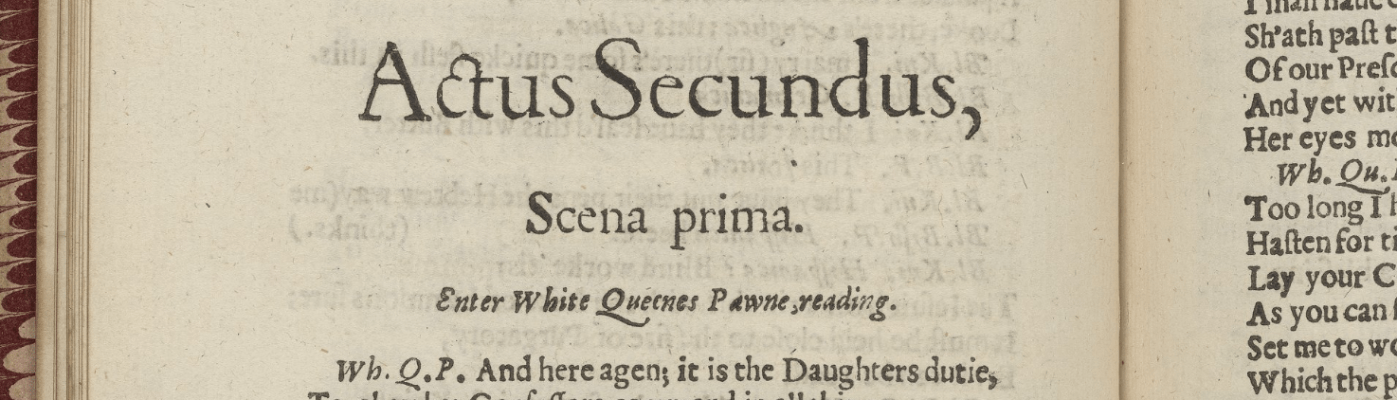
Our reading group on 25th April was led by Mirjam Haas. For this reading group, we read the final chapter from Emma Smith’s Portable Magic (2022): “What is a book?” and Mirjam prepared the following prompts. In the chapter, Smith tries to define what a book is(n’t), mainly by looking at definitions that scholars, institutions and artists have provided in the past, as well as by thinking about the “edges” of “bookhood” (20), i.e. book objects that challenge the notion of what a book can be (from e-books to a book made of cheese).
Smith’s own definition of what a book is (one she immediately challenges in the epilogue following the final chapter; see 296) centres on functions as well as readers/users. It matters little what a book looks like, what’s in it and what exactly we do with it, as long as we “interact[…]” with it in some way:
[A] book becomes a book in the hands of its readers. It is an interactive object. A book that is not handled and read is not really a book at all.
Smith, 293
Portable Magic focuses on books as objects: Smith excludes e-books as well as audiobooks based on the grounds, it seems, that they aren’t objects – there’s room for disagreement, I think, materiality not being bound to paper only. Nevertheless, the book does not only stimulate thinking about the relationship we as readers (or sometimes simply people in need of a doorstopper…) have with (individual) books, but also about the relationship between content and form more generally.
Thus, some of the questions up for discussion are:
- What do you make of the definitions offered and discussed? (I found it especially interesting that she seems to discard definitions offered by poets such as Emily Dickinson – “There is no Frigate like a Book / To take us Lands away” – while really offering a very similar definition in kind: both are functional and “relational” definitions that are focused on what readers can do with books…; see 280-281).
- What do you make of the fact that Smith ends her book with offering definitions, instead of opening with them?
- Which edition(s) do you use in your own work and why?
- What role does the form-content relationship – for books and beyond – play in your project?
- How are “book” and “text” related? Can we offer answers on one of these terms/concepts/“things” as long as the other remains unclear?
- Smith’s strategy for much of the book seems to be to work “from the edges” – that is to define her terms and approach the phenomena she looks at by using unusual, disregarded (for example because they are everyday or belong to popular culture), or untypical examples in order to eventually draw general conclusions. Rhetorically, of course, that’s pretty brilliant – but does it make the argument better?
- The epilogue especially suggests that it’s difficult to “get over” the special relationship we have with books as something almost “sacred” when thinking about, interacting with, and discussing them – does our bibliophilia make us biased? If so, towards what?
- And, finally, on a more personal note: are there books (in the “object” sense) that you have a special relationship with?
For a monthly reminder of upcoming reading groups, you can sign up to our mailing list.
 Revels Office